Manual: Quantum Lotto Relay — Multi-Stage Probability Flow
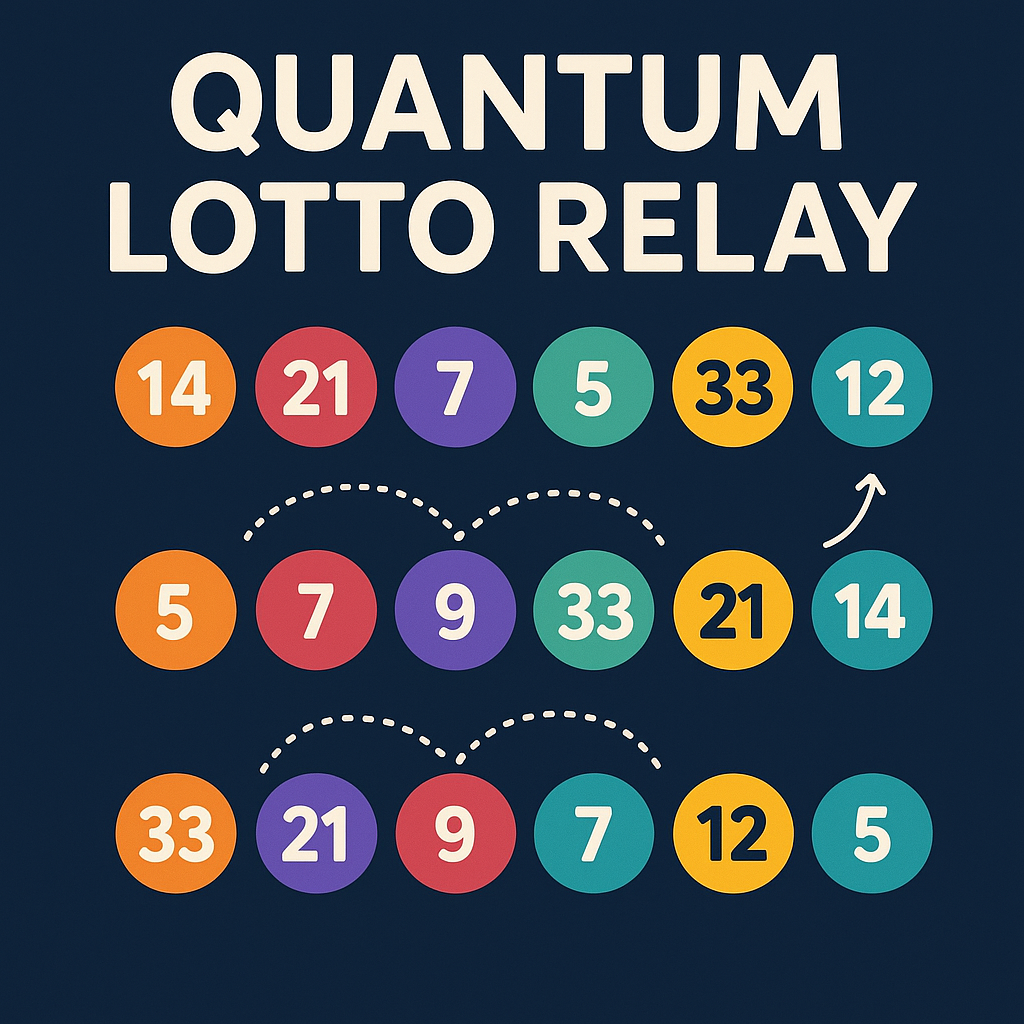
Quantum Lotto Relay operates as a layered numerical cycle where clusters reposition after each
internal step. This manual provides a detailed walk-through of cluster behavior, transition
mapping, and probability drift observation across extended sequences.
The core principle relies on dynamic rotation: each cluster contains a set of numbers that shift
position after every simulated draw. As clusters move, the numerical distribution becomes
increasingly diverse, allowing observers to watch how values disperse and regroup during
long-form cycles.
- Define three clusters and assign each cluster an independent number set.
- Trigger the first rotation cycle and register the initial positional alignment.
- Initiate sequential draws and document each cluster's reordered placement.
- Track distribution drift across at least 50–100 cycles for visual stability patterns.
- Review cluster collision points—moments when clusters align into repeating structures.
Analysis techniques
Observers can compare expected uniformity against actual rotation outcomes. Charting cluster
paths over multiple runs offers insight into transitional probability flow, making the model
ideal for probability mapping and educational demonstrations.
Manual: Neon Sphere Draw — Continuous Motion Simulation
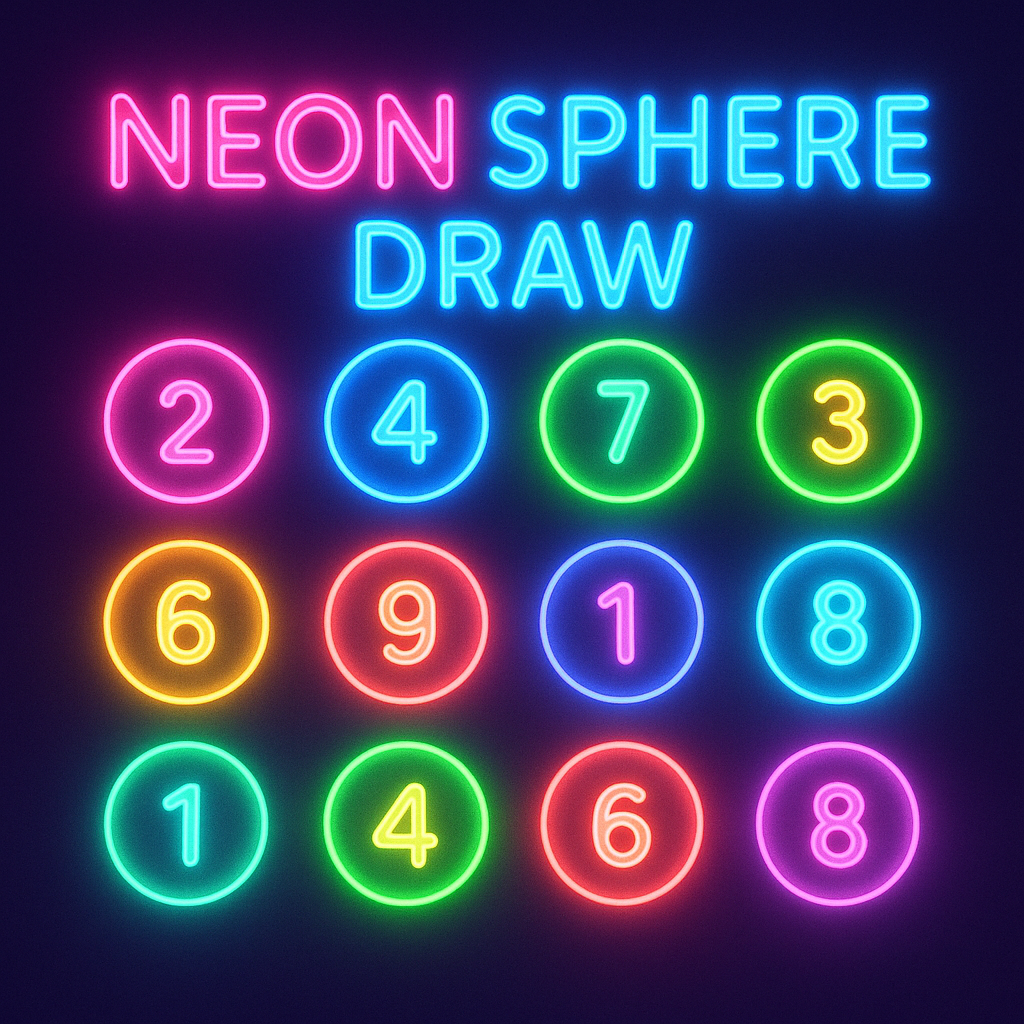
The Neon Sphere Draw system simulates continuous motion probability by presenting multiple
illuminated spheres that cycle values every second. This manual discusses timing sequences,
freeze-event calibration, and analysis techniques for capturing volatility patterns.
Each sphere operates independently, refreshing its internal value in a constant loop. When a
freeze event is applied, all spheres stop simultaneously, creating a snapshot of the system's
random state. These snapshots can be compared, indexed, and used to observe rapid-change
randomness.
- Define the number of spheres and set refresh intervals.
- Label spheres for logging and isolate refresh sequences.
- Trigger freeze events at random or fixed timing points.
- Record the resulting value set for pattern comparison.
- Repeat freeze cycles to assess volatility and sequence distribution.
Observation notes
High-frequency cycling leads to wide spread in captured values. Recording freeze outputs across
long sampling periods allows pattern density measurement and temporal randomness visualization,
which is especially useful in educational settings.
Manual: Aurora Pattern Lotto — Gradient-Forming Sequence Guide
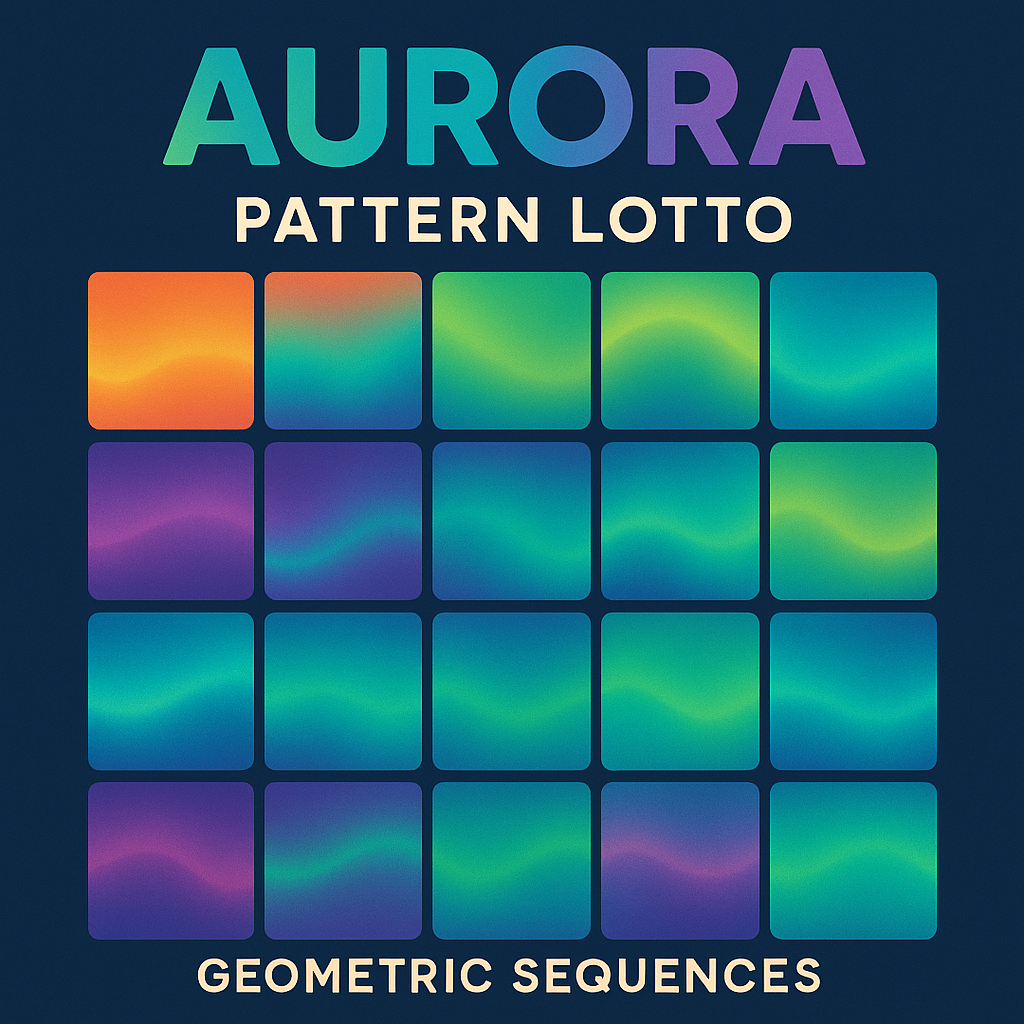
Aurora Pattern Lotto transforms numerical draws into gradient-based shapes inspired by flowing
aurora structures. This manual explains sequence grouping, gradient alignment, and geometric
pattern recognition for high-volume result sets.
The system groups results by intensity range, organizing them into vertical or radial formations
resembling aurora streaks. Observers analyze repetition, symmetry, and expansion trends inside
these gradient forms, allowing deeper study of number behavior in large datasets.
- Create a gradient scale and assign each numerical range a color band.
- Feed draw results into the gradient system and form initial pattern blocks.
- Stack results sequentially to build multi-layered geometric lines.
- Identify repeating wave sequences or mirrored formations.
- Compare pattern density over extended sample sizes.
Pattern recognition insights
As data accumulates, gradient shapes become more pronounced. Long-run visualization helps reveal
probabilistic tendencies, highlight rare clusters, and visually map how distributions settle
into recognizable structures.